
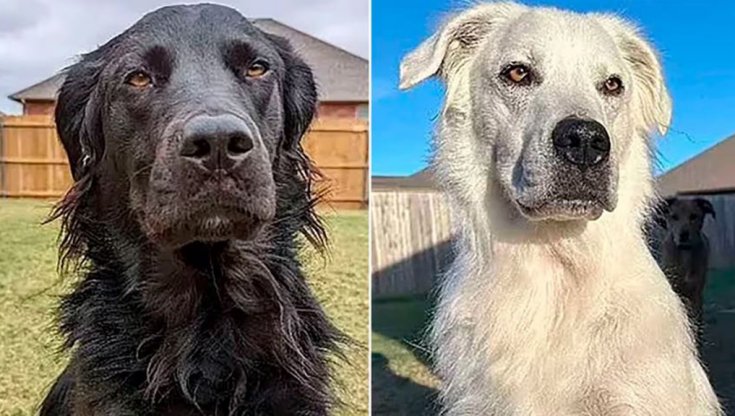
Il cane che ha cambiato colore

The dog that changed color

può un cane totalmente nero diventare totalmente bianco? Ebbene sì: è ciò che è successo a Buster, un cane di 4 anni che ha cambiato completamente colore Nel giro di un paio d’anni.

La causa di questa trasformazione è la vitiligine, una malattia che colpisce la pelle e i peli, e che causa la perdita del colore.

Il processo è iniziato dalle zampe e dal muso, e si è esteso piano piano su Tutto il corpo. Il padrone di Buster ľha raccontato sui social, pubblicando le foto dell’amico a quattro zampe che diventava sempre più bianco.

Buster, comunque, sta benissimo ed è felice del suo nuovo colore. La vitiligine non ha cure, ma per fortuna non causa altri problemi.


Read elementary level

Grammar

Pronome diretto L’
Direct object pronoun L’

“l’ha raccontato sui social”
(shared it on social media)

In this sentence, the direct pronoun L’ (short for LO) is used to replace the direct object “ciò” (it), referring to the previous sentence.

“ha raccontato CIÒ sui social” > “LO ha raccontato sui social”

When using direct object pronouns with the verb “avere” (to have) in the passato prossimo, you attach “lo” and “la” directly to the verb “ho” to form “l’ho.” 

> LO/LA + HO = L’HO

Hai visto Luca? (Have you seen Luca?)
> No, non l’ho visto (No, I haven’t seen him). 

Translation

Can a completely black dog turn completely white? Yes, indeed: this is what happened to Buster, a 4-year-old dog that completely changed color over the course of a couple of years.

The cause of this transformation is vitiligo, a condition that affects the skin and fur, causing a loss of color.

The process started on the paws and muzzle and gradually spread over the entire body. Buster’s owner shared the story on social media, posting photos of the four-legged friend as he became increasingly white.

Buster, however, is doing great and is happy with his new color. Vitiligo has no cure, but fortunately, it does not cause other problems.
