Passato prossimo
Present perfect
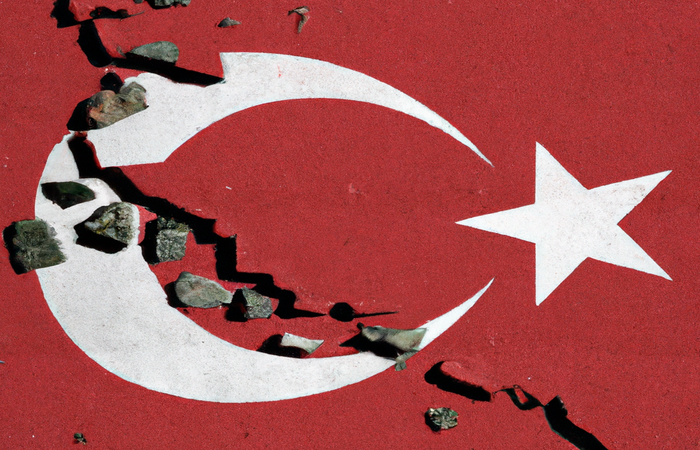
In the article, we can observe the use of the passato prossimo tense to describe the event of the earthquake.
The passato prossimo form of “colpire” is “ha colpito“. So the sentence “un fortissimo terremoto ha colpito la Turchia e la Siria” translates to “A very strong earthquake struck Turkey and Syria.”
Il passato prossimo in Italian is a past tense used to express completed actions that took place at a specific time in the past.
It is typically formed by using the auxiliary verb “avere” (to have) or “essere” (to be) followed by the past participle of the main verb.
(io) HO + SCRITTO = I wrote/have written
(io) SONO + ANDATO/ANDATA = I went/have gone
For regular verbs, the past participle is formed by dropping the infinitive ending (-are, -ere, or -ire) and adding the appropriate ending (-ato, -uto, or -ito).
For example, the past participle of the verb “parlare” (to speak) is “parlato” (spoken).
-are → ato (parlare → parlato)
-ere → uto (avere → avuto)
-ire → ito (dormire → dormito)
For irregular verbs, the past participle can be formed in different ways and must be memorized. For example, the past participle of the verb “essere” (to be) is “stato” (been).
fare → FATTO
chiedere → CHIESTO
dire → DETTO
Here is an example of the passato prossimo in Italian:
- Ieri sera ho mangiato una pizza (Last night I ate a pizza).
In this example, “ho mangiato” is the passato prossimo form of the verb “mangiare” (to eat), which is formed using the auxiliary verb “avere” (to have) and the past participle “mangiato” (eaten).


 and
 in

