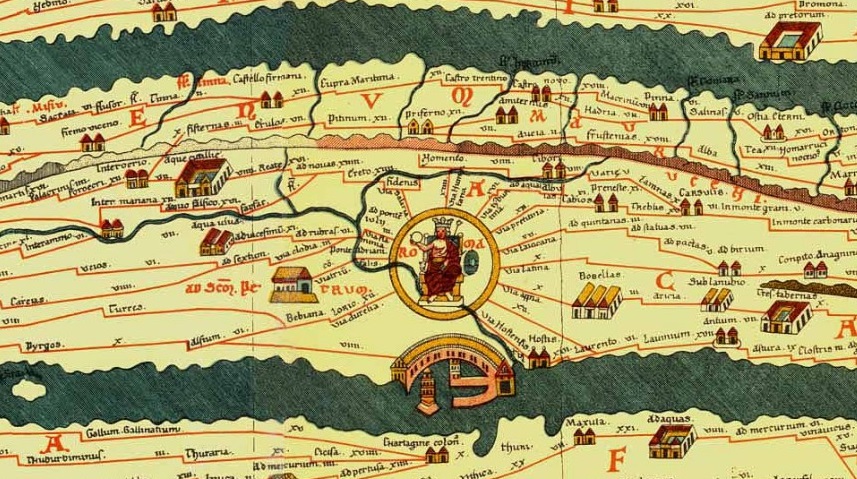
Il Google Maps dell’Impero Romano

The 'Google Maps' of Roman Empire

Avete mai sognato di fare un viaggio nell’Impero Romano?

Beh, oggi è possibile: l’Università di Stanford (in California) qualche anno fa ha creato un sito per simulare un viaggio nell’Impero Romano, al massimo della sua grandezza, intorno al 200 d.C. 

“Orbis“, questo il nome del sito (“Terra” in latino), funziona più o meno come Google Maps: sulla mappa si possono scegliere un punto di partenza e uno di arrivo all’interno dei confini dell’Impero Romano, ma anche la stagione e il mezzo (a piedi, a cavallo, in nave o con un carro, per esempio). 

in base al mezzo, inoltre, cambia il costo del viaggio: per esempio, per andare da Roma a Costantinopoli a giugno a cavallo ci vogliono circa 9 giorni; se invece si prende la nave per una parte del viaggio, si risparmiano due giorni ma il viaggio è più costoso. 

E voi che viaggio vorreste fare? Fatecelo sapere nei commenti!

Keywords

il viaggio: travel – 旅行

l’ Impero Romano: Roman Empire – 罗马帝国

il sito: site, webiste – 网站

simulare: to simulate – 模仿

funzionare: to work, to operate – 运行, 起作用, 工作

la mappa: map – 地图

in base a: depending on, according to – 基于, 根据, 取决于

volerci: to take – 需要

Grammar

“SI” Passivante
Passive “SI”

“se invece si prende la nave per una parte del viaggio, si risparmiano due giorni”
(if you take a ship for part of the journey, you can save two days)

SI is sometimes used as an impersonal subject in sentences with a passive meaning: although the verb form is active, the meaning is PASSIVE. 

In this type of sentence, the verb agrees in number and gender with the SUBJECT of the sentence, hence the verb can be in either the third person singular or plural. 

Obviously, SI PASSIVANTE can be used only when the verb can actually be turn into passive, hence only TRANSITIVE verbs.

Examples:

– “Il biglietto (s.) SI COMPRA all’ingresso”
= The ticket is bought-You buy your ticket at the door

– “I biglietti (p.) SI COMPRANO all’ingresso”
= The tickets are bought-You buy your tickets at the door

Keypoints:

  • makes the meaning passive
  • the verb can be 3rd person singular or plural (according to the subject)
  • no intransitive verbs

Translation

Have you ever dreamed of traveling in the Roman Empire?

Well, today you can, sort of: a few years ago, Stanford University in California created a website that allows you to simulate a journey through the Roman Empire at the height of its territorial expansion, around 200 AD.

The site is called “Orbis” (which means “Earth” in Latin) and functions somewhat like Google Maps: on the map, you can choose a starting point and a destination within the borders of the Roman Empire, as well as the season and the mode of transportation (on foot, on horseback, by ship, or by wagon, for example).

The chosen mode of transportation also affects the cost of the journey, of course: for example, to travel from Rome to Constantinople on horseback in June, it takes about 9 days; if you take a ship for part of the journey, you can save two days but the journey will be more expensive.

So, what journey would you like to take? Let us know in the comments!