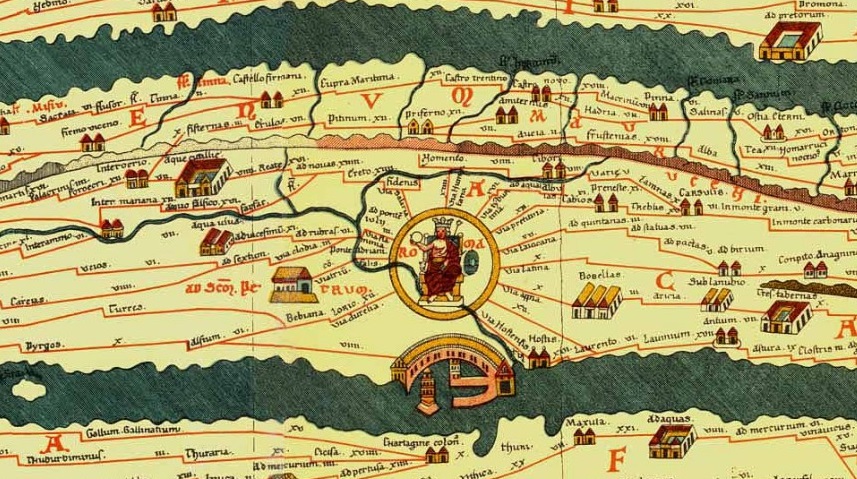
Il Google Maps dell’Impero Romano

The 'Google Maps' of Roman Empire

Avete mai sognato di viaggiare nell’Impero Romano?

Beh, oggi si può, o quasi: l’Università di Stanford (in California) qualche anno fa ha realizzato un sito che permette di simulare un viaggio nell’Impero Romano, all’apice della sua espansione territoriale, intorno al 200 d.C. 

“Orbis“, questo il suo nome (che significa “Terra”, in latino), è un navigatore che funziona grossomodo come l’odierno Google Maps: sul sito si possono scegliere un punto di partenza e uno di arrivo sulla mappa (che riproduce i confini dell’Impero Romano, comprendente gran parte dell’attuale Europa, del Nord Africa e del Medio Oriente), la stagione e il mezzo con cui viaggiare (a piedi, a cavallo, in nave o con un carro, per esempio). 

Il mezzo scelto, inoltre, condiziona il costo del viaggio, ovviamente: per fare un esempio, se si volesse andare da Roma a Costantinopoli a giugno a cavallo ci vorrebbero circa 9 giorni; se invece si prendesse la nave per un tratto del viaggio, si risparmierebbero due giorni, ma il viaggio sarebbe decisamente più costoso. 

E voi che viaggio vorreste fare? Fatecelo sapere nei commenti!

Keywords

viaggiare: to travel – 旅行, 旅游

l’ Impero Romano: Roman Empire – 罗马帝国

il sito: site, webiste – 网站

simulare: to simulate – 模仿

il navigatore: browser, navigator – 浏览器

grossomodo: more or less, approximately – 或多或少

condizionare: to condition, to affect – 影响, 决定

volerci: to take – 需要

Grammar

Periodo Ipotetico: Possibilità
IF Clause: Possibility

“se si volesse andare da Roma a Costantinopoli a giugno a cavallo ci vorrebbero circa 9 giorni”
(if you wanted to go from Rome to Constantinople on horseback in June, it would take about 9 days)

In Italian, there are 3 types of “if clauses”:

Type 1 – REALITY
Type 2 – POSSIBILITY
Type 3 – IMPOSSIBILITY

Let’s focus on the second type, POSSIBILITY:

It expresses a possible hypothesis, something that CAN or CANNOT happen. If it happened, it could have a certain consequence.

It’s formed with:

→ IF + IMPERFECT SUBJUNCTIVE + PRESENT CONDITIONAL

– “Se FOSSI ricco, VIAGGEREI per il mondo”
= If I WERE rich, I WOULD TRAVEL the world

– “Se VIVESSI a Napoli, MANGEREI pizza ogni giorno”
= If I LIVED in Naples, I WOULD EAT pizza every day 

Translation

Have you ever dreamed of traveling in the Roman Empire? 

Well, today you can, or almost: a few years ago, Stanford University (California) created a website that allows you to simulate a journey through the Roman Empire at the height of its territorial expansion, around 200 AD.

“Orbis”, that’s its name (which means “Earth” in Latin), is a navigator that works roughly like today’s Google Maps: on the website, you can choose a starting and ending point on the map (which reproduces the borders of the Roman Empire, including much of present-day Europe, North Africa, and the Middle East), the season, and the means of travel (on foot, horseback, by ship, or by cart, for example).

The chosen means of transportation also determines the cost of the journey, of course: for example, if you wanted to go from Rome to Constantinople on horseback in June, it would take about 9 days; if you took a ship for part of the journey, you would save two days, but the journey would be considerably more expensive.

And what journey would you like to take? Let us know in the comments!