Perché si festeggia l’Epifania?

Why we celebrate Ephifany

Il 6 gennaio è l’Epifania, una festa religiosa. 

secondo i Vangeli, in questo giorno Gesù Bambino appare in pubblico per la prima volta. 

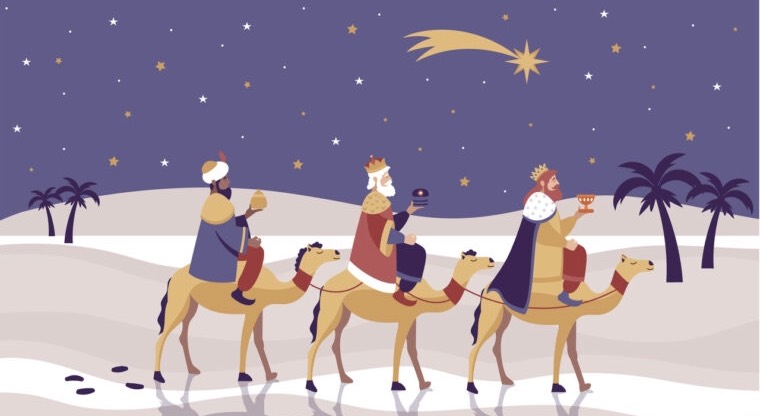
infatti, i tre Re Magi arrivano a Betlemme il 6 gennaio per portare a Gesù dei regali. 
Per questo motivo, in Italia il 6 gennaio i bambini ricevono dei regali dalla Befana, una vecchia signora.

La mattina del 6 gennaio i bambini buoni trovano una calza con dentro dei dolci.
al contrario, i bambini cattivi ricevono una calza con dentro il carbone.

Keywords

religioso/a: religious – 宗教的

il Vangelo: Gospel – 福音

Gesù Bambino: Baby Jesus – 耶稣婴儿

apparire: to appear – 出现

ricevere: to receive – 接收

i Re Magi: Three Kings – 东方三博士或称三智者

la calza: sock – 袜子

Grammar

Articolo partitivo = “dei”
The partitive article: “some”

“…ricevono dei regali”
(…receive gifts)

In Italian the partitive article indicates some part, an unspecified number of a group of things/people. It’s formed by the preposition “di” + the definite article, that agrees in number and gender with word that follows, in this case: di + i = dei.

It can be used with both countable and uncountable nouns; with countable nouns, only plural forms (dei, delle, degli) can be used:

  • Vorrei dello zucchero, grazie (I would like some sugar, please)
  • Ci sono degli studenti italiani in classe (There are some Italian students in class)
  • Oggi ho del tempo libero (Today I have some free time)

Translation

January 6th is the Epiphany, a religious celebration.

According to the Gospels, on this day, Baby Jesus appears in public for the first time.

Indeed, the Three Kings arrive in Bethlehem on January 6th to bring gifts to Jesus.
For this reason, in Italy on January 6th, children receive gifts from the Befana, an old lady.

On the morning of January 6th, well-behaved children find a sock with sweets.
On the contrary, naughty children receive a sock with coal inside.

Quiz

Pronti?