Perché si festeggia l’Epifania?

Why we celebrate Ephifany

Il 6 gennaio i cattolici festeggiano l’Epifania, la prima volta che Gesù è apparso in pubblico. Il termine, infatti, viene dal greco epifàino, cioè “mostrarsi”.

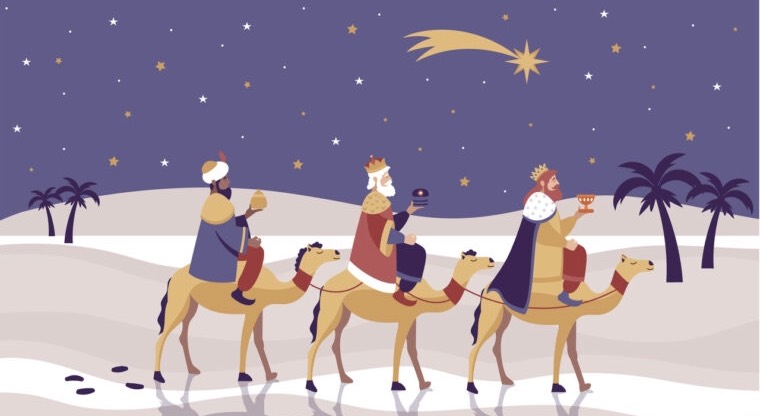
secondo il Vangelo di Matteo, il 6 gennaio i tre Re Magi arrivano alla capanna di Gesù Bambino per portargli dei preziosi regali. I tre Re Magi trovano la strada Grazie alla stella Cometa in cielo.

Per questo motivo, in Italia e in molti paesi cattolici, il giorno dell’Epifania i bambini ricevono dei regali. Secondo la tradizione, in Italia è una donna brutta e anziana che porta i regali: la Befana.

La mattina del 6 gennaio, i bambini italiani trovano una calza con dentro dei dolci se sono stati “buoni”, e invece dei pezzi di carbone se sono stati “cattivi”.

Keywords

cattolico/a: catholic – 天主教的

apparire: to appear – 出现

il Vangelo: Gospel – 福音

i Re Magi: Three Kings – 东方三博士或称三智者

la capanna: manger, hut – 小屋, 马槽

la Stella Cometa: Star of Bethlehem – 伯利恒之星

la Befana: Epiphany Witch – 贝法纳

la calza: sock – 袜子

il carbone: coal – 煤炭

Grammar

Pronome indiretto GLI
Indirect object pronoun GLI

“per portargli dei preziosi regali”
(to bring him precious gifts)

Indirect object pronoun replace nouns and answer the question “to whom/for whom?”. They’re used when the verb requires the preposition “a”. For the 3rd person masculine singular we use the pronoun “GLI”:

– Gli ho dato il libro. (I gave the book to him)
– Gli hai telefonato? (Did you call him?)

Normally comes before the verb. However, if there are two verbs, or the verb is in the gerund, imperative or infinitive form, the pronoun follows the verb:

– Mi piace parlargli (I like talking to him)

Note that “gli” can also be used as a plural indirect object pronoun meaning “to them/for them“, instead of the more formal “loro”:
– Gli ho dato il libro (I gave the book to them)

Translation

On January 6th, Catholics celebrate the Epiphany, the first time that Jesus appeared in public. The term comes from the Greek “epifàino,” meaning “to show oneself.”

According to the Gospel of Matthew, on January 6th, the Three Kings arrive at the manger of Baby Jesus to bring him precious gifts. The Wise Men find their way guided by the Star of Bethlehem in the sky.

For this reason, in Italy and many Catholic countries, on the day of the Epiphany, children receive gifts. According to tradition in Italy, it is an ugly old woman who brings the gifts: the Befana.

On the morning of January 6th, Italian children find a sock with sweets if they have been “good,” and instead, pieces of coal if they have been “naughty.”

Quiz

Pronti?