Finché esisterà il Colosseo, esisterà anche Roma

As long as the Colosseum exists, Rome will also exist

se conoscete il Colosseo solo per il film “Il Gladiatore”, ecco un po’ della sua storia.

Originariamente chiamato anfiteatro Flavio, il Colosseo si trova nel cuore di Roma, ed è Il più grande anfiteatro del mondo. 

la sua costruzione è iniziata nel 71/72 d.C. ed è terminata nell’80 d.C. 

ha un perimetro di 527 metri e un’altezza di 48,5 metri (che in origine erano 52).

durante gli spettacoli di gladiatori e altri eventi pubblici, poteva ospitare fino a 87.000 spettatori. 

Nel 1980 è diventato Patrimonio dell’umanità dell’UNESCO, e nel 2007 una delle nuove sette meraviglie del mondo. 

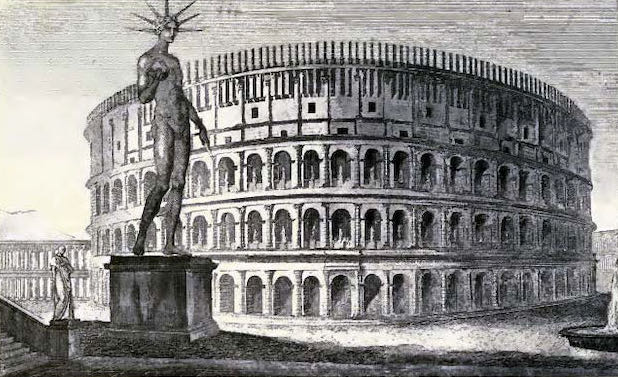
Il nome “Colosseo” è nato solo nel Medioevo, e probabilmente viene dalla vicina statua di Nerone, chiamata il “Colosso di Nerone”. La statua, tuttavia, è sparita quasi subito, il Colosseo è ancora Qui con noi. 

E secondo una famosa profezia, ci sarà ancora per molto tempo:

«Finché esisterà il Colosseo, esisterà anche Roma;

quando cadrà il Colosseo, cadrà anche Roma;

quando cadrà Roma, cadrà anche il mondo»

Keywords

l’ anfiteatro: amphitheater – 圆形露天剧场

terminare: to finish, to end – 结束

il perimetro: perimeter – 周长

i gladiatori: gladiators – 角斗士

ospitare: to host – 容纳

il Patrimonio dell’umanità: World Heritage – 世界遗产

le sette meraviglie del mondo: Seven Wonders of the World – 世界七大奇迹

il Medioevo: Middle Ages – 中世纪

la statua: statue – 雕像

Nerone: Nero (Roman emperor) – 尼禄

la profezia: prophecy – 预言

cadere: to fall – 掉落

Grammar

Verbi ausiliari: Avere Vs Essere
Auxiliary verbs: Avere Vs Essere

“La sua costruzione è iniziata nel 71/72 d.C. ed è terminata nell’80 d.C.”
(Its construction began in 71/72 AD and ended in 80 AD)

In this sentence, both “iniziata” and “terminata” are intransitive verbs, which means they don’t take a direct object. In Italian, intransitive verbs often use the auxiliary verb “essere” in compound tenses, like the passato prossimo in this case. 

Note that the past participle of intransitive verbs agrees in gender and number with the subject of the sentence. Therefore, the correct forms in this case are “è iniziata” and “è terminata”, and not “è iniziato” and “è terminato”.

Translation

If you only know about the Colosseum from the movie “Gladiator,” here is a bit of its history.

Originally called the Flavian Amphitheatre, the Colosseum is located in the heart of Rome and is the largest amphitheater in the world.

Its construction began in 71/72 AD and was completed in 80 AD. It has a perimeter of 527 meters and a height of 48.5 meters (which was originally 52 meters).

During gladiatorial games and other public events, it could accommodate up to 87,000 spectators. In 1980, it became a UNESCO World Heritage Site, and in 2007, one of the New Seven Wonders of the World.

The name “Colosseum” only emerged in the Middle Ages and probably comes from the nearby statue of Nero, called the “Colossus of Nero.” However, the statue disappeared almost immediately, while the Colosseum is still here with us.

And according to a famous prophecy, it will be here for a long time:

“As long as the Colosseum stands, Rome will stand;
when the Colosseum falls, Rome will fall;
when Rome falls, the world will fall.”