Che cos’è il Palio di Siena?

What is the Palio of Siena?

chi ama l’Italia, e la Toscana in particolare, sicuramente avrà già sentito parlare del Palio di Siena. ma siete sicuri di saperne abbastanza? Vediamo!

che cos’è il Palio di Siena?

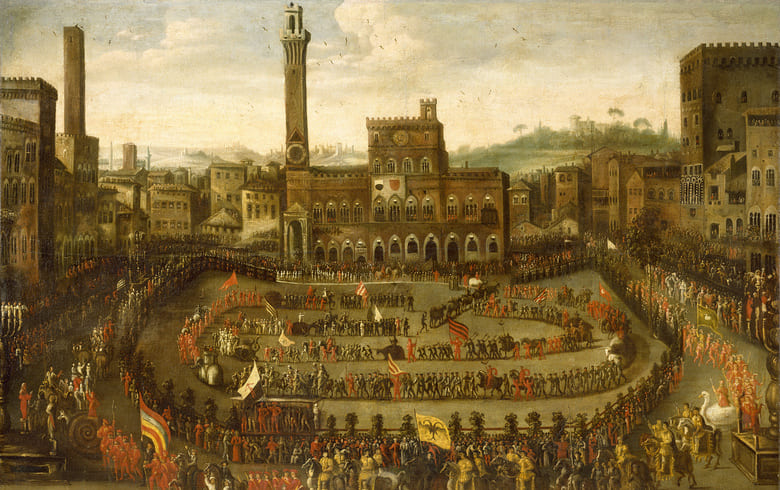
Il Palio è la competizione equestre più famosa d’Italia, e si tiene nella magnifica Piazza del Campo a Siena, due volte l’anno, il 2 luglio e il 16 agosto.

ad ogni edizione possono partecipare 10 cavalli, rappresentanti di altrettante Contrade, cioè le zone in cui è suddivisa la città.

La storia del Palio affonda le sue radici in tempi davvero remoti: nasce addirittura nel Medioevo, e il primo documento risale al 1238.

Per questo motivo, è un evento sentitissimo dai senesi, che lo considerano un elemento fondamentale della loro identità. 
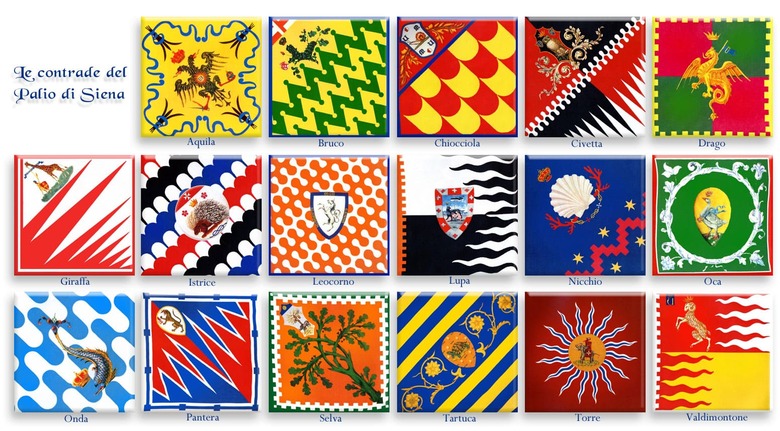
Le 17 contrade di Siena

Tra le 17 Contrade della città esistono infatti accese rivalità o alleanze che durano da secoli. come amano dire i senesi: il Palio non dura un giorno, bensì Tutto l’anno.

Negli ultimi decenni la manifestazione ha acquisito molta popolarità anche all’estero, e ogni anno attira turisti da tutto il mondo che riempiono Piazza del Campo per assistere allo spettacolo.

Le tradizioni prima della gara
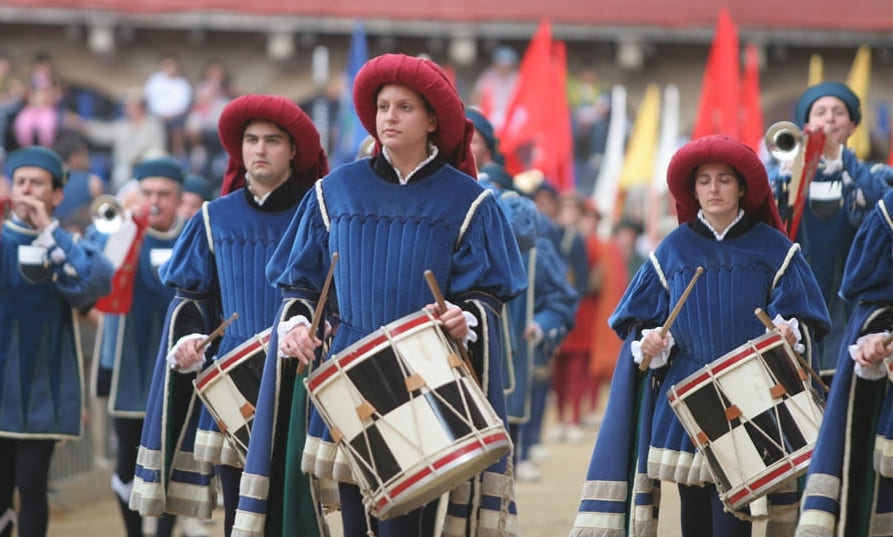
Il corteo storico

Insomma, il Palio di Siena non è semplicemente una corsa di cavalli. La manifestazione prevede un gran numero di tradizioni e usanze che vengono religiosamente rispettate dai senesi.

La giornata del Palio inizia dalle 8 del mattino con la celebrazione della Messa del Fantino. alle 15:00, presso ciascuna Contrada, c’è la benedizione dei cavalli.

A questo rito segue il pittoresco corteo storico, che da ogni Contrada arriva fino alla centrale Piazza del Campo. Al corteo partecipano più di 600 figuranti in abiti medievali.

La corsa in Piazza del Campo
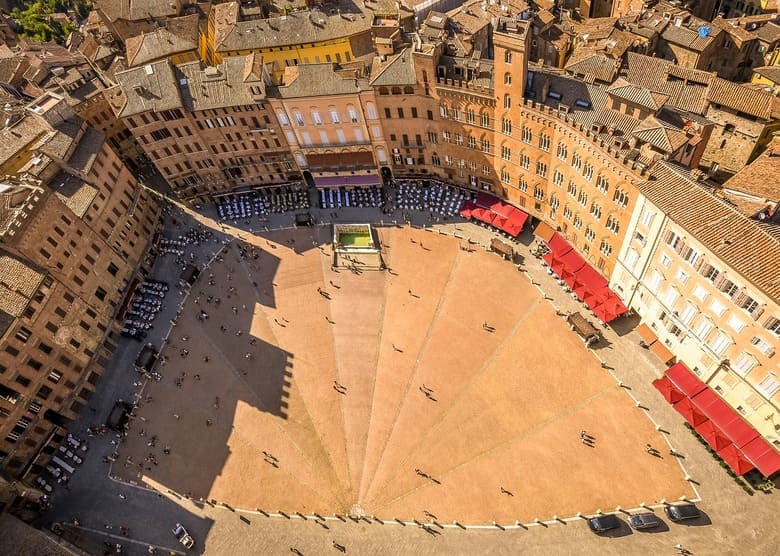
Piazza del Campo

Sebbene l’attesa per l’inizio della gara possa essere lunghissima a volte, la gara in se è piuttosto breve: i cavalli devono eseguire tre giri della piazza, cercando di superarsi in ogni modo. 

Non mancano gli scontri tra fantini e le cadute rovinose, specialmente alla strettissima curva di San Martino.

A vincere è il primo cavallo a tagliare il traguardo, con o senza fantino. A quel punto, per la Contrada vincitrice inizia una festa che dura non solo tutta la notte, ma tutto l’anno!

E voi avete mai visto il Palio? Che ne pensate?

Keywords

equestre: equestrian – 骑术的

la contrada: district, neighborhood – 区域, 街区

sentito/a: felt – 感受到的, 真诚的

la rivalità: rivalry – 竞争

l’ alleanza: alliance – 联盟

l’ usanza: tradition, custom – 传统, 习俗

il corteo: procession – 游行

figurante: participant, performer – 参与者, 演员

lo scontro: clash – 冲突

la caduta: fall – 跌倒

il fantino: jockey – 骑手

Grammar

Sebbene + Congiuntivo: Frase Concessiva
Sebbene + Subjunctive: Concessive Clause

“Sebbene l’attesa per l’inizio della gara possa essere lunghissima a volte, la gara in se è piuttosto breve”
(Although the wait for the start of the race can sometimes be very long, the race itself is rather short)

The conjunction “sebbene” introduces a concessive clause, indicating that there is a contrast or concession between the two parts of the sentence.
In Italian, concessive clauses introduced by some conjunctions of “contrast“, must be followed by subjunctive mood:

  • benché + subjunctive
  • sebbene + subjunctive
  • nonostante + subjunctive
  • malgrado + subjunctive


For example:

  • Sebbene piova, uscirò per una passeggiata. (Although it’s raining, I will go out for a walk.)
  • “Benché piovesse, siamo usciti lo stesso. (Even though it was raining, we went out.) 
  • Esco nonostante sia stanco. (I go out even though I’m tired.)
  • Vorrei mangiare malgrado non abbia fame. (I’d like to eat even though I’m not hungry.)


Attention: all these conjunctions can introduce a verb, but only “nonostante-malgrado” can be used with nouns:

→ NONOSTANTE / MALGRADO + NOUN or VERB
→ BENCHÉ – SEBBENE + VERB

  • Nonostante/Malgrado la pioggia (n.), sono uscito. (Despite the rain, I went out)

But:

  • Sebbene/Benché piovesse (v.), sono uscito. (Despite it was raining, I went out)

Translation

Who loves Italy, and Tuscany in particular, will surely have heard of the Palio di Siena. But are you sure you know enough about it? Let’s see!

What is the Palio di Siena?

The Palio is the most famous equestrian competition in Italy, and it takes place in the magnificent Piazza del Campo in Siena, twice a year, on July 2nd and August 16th.

Each edition involves 10 horses, representatives of as many Contrade, which are the districts into which the city is divided.

The history of the Palio dates back to ancient times: it was born in the Middle Ages, and the first document dates back to 1238.

For this reason, it is a highly significant event for the people of Siena, who consider it a fundamental element of their identity.

Among the city’s 17 Contrade, there are intense rivalries or alliances that have lasted for centuries. As the people of Siena like to say: the Palio doesn’t last just a day, but the whole year.

In recent decades, the event has gained a lot of popularity abroad, and every year it attracts tourists from all over the world who fill Piazza del Campo to witness the spectacle.

Traditions before the race

In short, the Palio di Siena is not just a horse race. The event includes a great number of traditions and customs that are religiously followed by the people of Siena.

The day of the Palio begins at 8 o’clock in the morning with the celebration of the Mass of the Jockey.
At 3:00 PM, at each Contrada, there is the blessing of the horses.

This ritual is followed by the picturesque historical procession, which arrives at the central Piazza del Campo from each Contrada. The procession involves over 600 participants dressed in medieval costumes.

The race in Piazza del Campo

Although the wait for the start of the race can sometimes be very long, the race itself is rather short: the horses have to complete three laps of the square, trying to outdo each other in every possible way. Collisions between jockeys and dramatic falls are not uncommon, especially at the very tight curve of San Martino.

The winner is the first horse to cross the finish line, with or without a jockey. At that point, a celebration begins for the winning Contrada that lasts not only throughout the night but throughout the year!

Have you ever seen the Palio? What do you think of it?