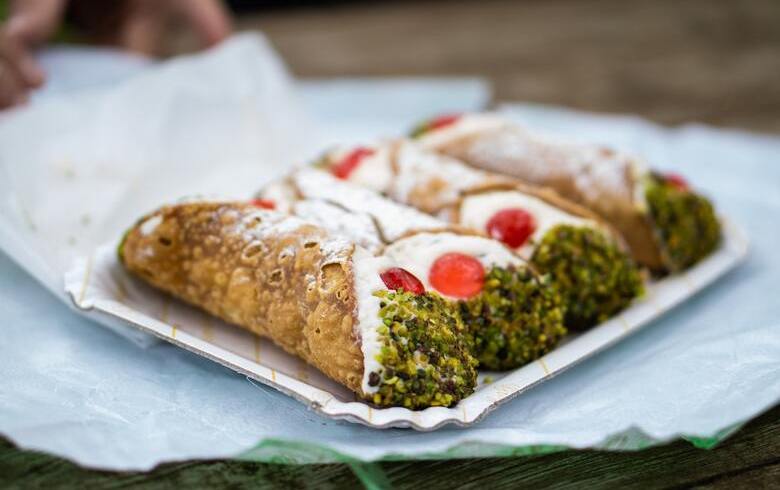
I cannoli siciliani tra i 50 dolci più buoni al mondo, secondo la CNN

Sicilian cannoli among the 50 best desserts in the world, according to CNN

La sezione Food della CNN, l’emittente televisiva statunitense, ha incluso i cannoli siciliani tra le 50 migliori eccellenze dolciarie del mondo.

Il cannolo è una delle specialità più conosciute della pasticceria siciliana. Secondo la tradizione, nacque all’interno di un convento di Caltanissetta, e originariamente era legato alla festa del Carnevale. È composto da una crosta di pasta fritta e un ripieno a base di ricotta di pecora.

“Ci sono dessert che superano di gran lunga i confini geografici, spinti dalla loro bontà” – ha spiegato Jen Rose Smith, la responsabile della lista. 

secondo la sua dolcissima descrizione, questo dessert tipico della Trinacria è “un guscio croccantissimo che racchiude un ripieno cremoso, un classico siciliano le cui radici affondano nella storia culinaria dell’isola”.

Insomma, avete capito: una vera prelibatezza! E voi lo avete mai provato?

Keywords

il cannolo siciliano: Sicilian cannoli – 西西里卷饼

dolciario/a: confectionery, pastry – 甜食的,糕点的la 

crosta: crust – 外壳

il ripieno: filling – 馅料

la ricotta: ricotta cheese – 乳清干酪

la Trinacria: Trinacria (symbol of Sicily) – 特里纳克里亚(西西里的象征)

croccante: crunchy – 酥脆的

cremoso/a: creamy – 奶油状的

la prelibatezza: delicacy – 美味佳肴

Grammar

LE CUI = “whose”

“un classico siciliano le cui radici affondano nella storia culinaria dell’isola”
(a Sicilian classic whose roots are deeply embedded in the culinary history of the island)

In this sentence, “le cui” is a relative pronoun that means “whose” in English. It is used to introduce a relative clause that describes or specifies the noun that comes before it.

In Italian, the relative pronoun “cui” can be used in combination with the definite article to form four different forms: “il cui” (masculine singular), “la cui” (feminine singular), “i cui” (masculine plural), and “le cui” (feminine plural).

The definite article agrees in gender and number with the noun it is referring to, while “cui” is invariable. These forms are used to indicate possession or relationship between two things or people.

For example:

  • “Il cane, il cui padrone è mio amico, è molto affettuoso.” (The dog, whose owner is my friend, is very affectionate.)
  • “La casa, la cui finestra è aperta, sembra vuota.” (The house, whose window is open, seems empty.)
  • “I libri, i cui autori sono molto famosi, sono esauriti.” (The books, whose authors are very famous, are sold out.)
  • “Le ragazze, le cui borse sono state rubate, hanno sporto denuncia” (The girls, whose bags were stolen, filed a report)

Translation

The Food section of CNN, the American television network, has included Sicilian cannoli among the top 50 sweet delicacies in the world.

The cannolo is one of the most well-known specialties of Sicilian pastry. According to tradition, it originated in a convent in Caltanissetta, and originally was associated with the Carnival celebration. It consists of a fried dough shell and a filling made of sheep’s milk ricotta.

“There are desserts that far exceed geographical boundaries, driven by their goodness,” explained Jen Rose Smith, the person in charge of the list.

According to her sweet description, this typical dessert of Trinacria is “an incredibly crunchy shell that encloses a creamy filling, a Sicilian classic whose roots are deeply embedded in the culinary history of the island.”

In short, you’ve got it: a true delicacy! Have you ever tried it?