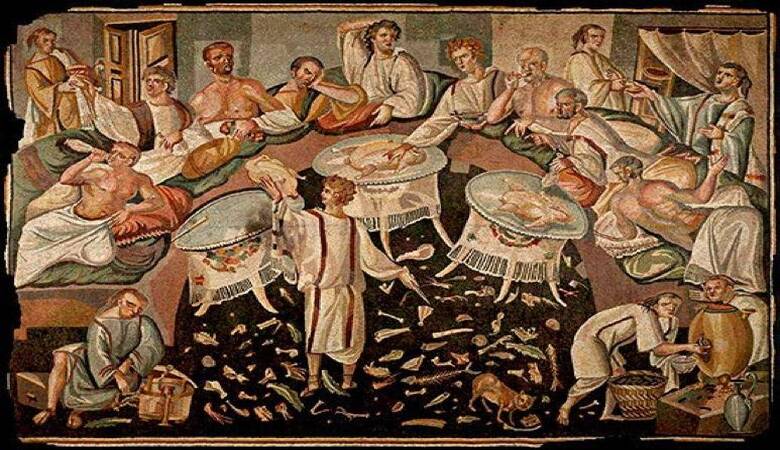
Il primo “All you can eat” di cucina romana

The first "All you can eat" with Roman cuisine

Negli ultimi anni in Italia c’è stata una vera esplosione dei ristoranti asiatici “all you can eat”, molto popolari sia tra i giovani che tra gli adulti ormai. 

La risposta nostrana arriva da Roma, dove il 30 aprile ha aperto il primo ristorante di cucina tipica romana con la formula “all you can eat”. Con un nome molto appropriato: “senza Fondo”, un’espressione romana che si usa per definire una persona con uno stomaco senza limiti ( “bottomless”, in inglese ). Il ristorante, che si trova al centro della capitale, offrirà il menù senza limiti a pranzo e cena al costo di 19,50€ e 25,50€. 

I piatti appartengono tutti alla tradizione culinaria romana, a partire da tutte le famose paste della capitale: amatriciana, carbonara, gricia, cacio e pepe, arrabbiata…  

poi ci sono gli immancabili fritti romani come i supplì, i fiori di zucca e il filetto di baccalà, e non possono mancare neanche le bruschette, la pizza romana bassa e croccante, i tradizionali saltimbocca alla romana, la trippa, le polpette al sugo, e infine la cicoria ripassata in padella come contorno. Insomma, c’è davvero Tutto e per tutti i gusti! 

“Volevamo celebrare la cucina romana in un format divertente, con piatti veri, autentici e senza limite. E quale posto migliore di un “all you can eat” Romano del centro, accanto a Piazza Navona?” – raccontano i fondatori Diana russo e Luciano Rufino – “L’ambiente è intimo e familiare, come una tipica osteria del passato, con particolare attenzione al rapporto con i clienti. molte ricette sono di nonna e zia” – aggiunge Diana – “perché la nostra idea era proprio quella di portare la cucina di casa, la cucina della domenica”. 

Che ne pensate? Vi piacerebbe provarlo?

Keywords

ristorante all you can eat: all-you-can-eat restaurant – 自助餐厅

nostrano/a: local, native – 本地的,当地的

la tradizione culinaria: culinary tradition – 烹饪传统

romano/a: Roman – 罗马的

i fritti: fried food – 炸食

il contorno: side dish – 配菜

ce n’è per tutti i gusti: there’s something for everyone – 这里有适合每个人口味的菜肴

autentico/a: authentic – 正宗的

l’ osteria: traditional restaurant – 乡村小酒馆

Grammar

Sia…sia/che = both…and

“…molto popolari sia tra i giovani che tra gli adulti ormai”
(…very popular among both young people and adults)

In this sentence, ”sia… che” means “both… and” in English. Like “sia… sia”, it is used to express that two things or groups are being considered and that the statement applies to both of them.

Here are some examples:

  • La pizza è molto popolare sia in Italia che negli Stati Uniti. (Pizza is very popular both in Italy and in the United States.)
  • Mia madre sa cucinare sia piatti tradizionali che piatti esotici. (My mother knows how to cook both traditional dishes and exotic ones.)
  • Sono appassionata di musica sia classica che moderna. (I am passionate about both classical and modern music.)

Translation

In recent years, there has been a real explosion of “all you can eat” Asian restaurants in Italy, very popular among both young people and adults.

The local response comes from Rome, where on April 30th, the first restaurant of typical Roman cuisine with the “all you can eat” formula opened its doors. With a very appropriate name: “Senza Fondo,” a Roman expression used to describe a person with a bottomless stomach.

The restaurant, located in the center of the capital, offers an unlimited menu for both lunch and dinner at a cost of €19.50 and €25.50.

All dishes belong to the Roman culinary tradition, starting with all the famous pasta of the capital: Amatriciana, Carbonara, Gricia, Cacio e Pepe, Arrabbiata…

Then there are the inevitable Roman fried foods such as supplì, pumpkin flowers, and cod fillet, and there must also be bruschetta, low and crispy Roman pizza, traditional Roman saltimbocca, tripe, meatballs in tomato sauce, and finally sautéed chicory as a side dish. In short, there really is everything to everyone’s taste!

“We wanted to celebrate Roman cuisine in a fun format, with real, authentic, and limitless dishes. And what better place than a Roman ‘all you can eat’ in the city center, next to Piazza Navona?” – say the founders, Diana Russo and Luciano Rufino. “The atmosphere is intimate and familiar, like a typical osteria of the past, with particular attention to the relationship with customers. Many recipes are from grandma and aunt,” adds Diana, “because our idea was precisely to bring home cooking, Sunday cooking.”

What do you think? Would you like to try it?