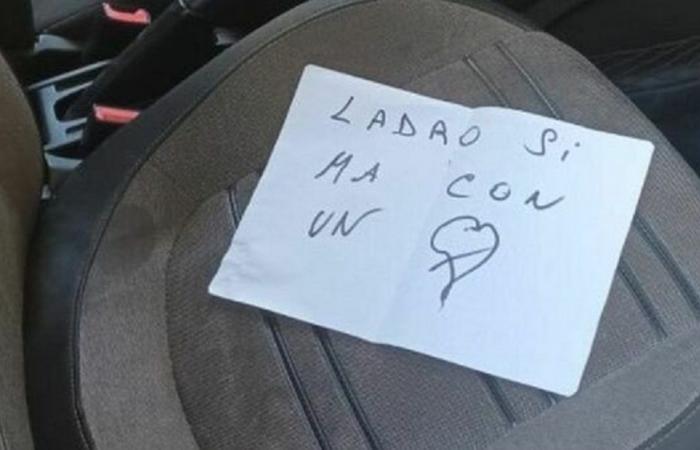
“Ladro sì, ma con un cuore” 🖤

Thief yes, but with a heart

pasquale e Rosalba sono una giovane coppia di sposi. 

domenica mattina, il giorno dopo il matrimonio, la loro macchina viene rubata.  dentro la macchina, purtroppo, ci sono anche i loro abiti del matrimonio.

I due sposi sono molto tristi. Chiedono aiuto sui social per avere indietro almeno i vestiti, perché per loro sono molto importanti.

Due giorni dopo, la loro macchina viene ritrovata nel centro di Foggia. Dentro ci sono i loro vestiti, ma c’è anche un biglietto: “Ladro sì, ma con un cuore”. Un vero ladro gentiluomo.

Keywords

la coppia: couple – 情侣

gli sposi: newlyweds – 新婚夫妇

il matrimonio: marriage – 婚礼

rubare: to steal – 偷窃

gli abiti: clothes – 衣物

ritrovare: to find – 找到

il biglietto: ticket – 票

il ladro: thief – 小偷

Grammar

CI + ESSERE = there is/are

“Dentro ci sono i loro vestiti, ma c’è anche un biglietto”
(Inside there are their clothes, but there’s also a note)

In Italian, the choice between “ci sono” and “c’è” depends on whether you are referring to multiple things (plural) or a single thing (singular).

  • C’È + SINGULAR NOUN → THERE IS
  • CI SONO + PLURAL NOUN → THERE ARE

In the sentence above, we have two elements: their clothes (“i vestiti”, plural noun) and a note (“un biglietto”, singular noun).
Some examples:

  • C’è un problema (There’s a problem)
  • Ci sono due libri (There are two books)
  • C’è qualcuno? (Is someone there?)

Translation

Pasquale and Rosalba are a young married couple.

Sunday morning, the day after their wedding, their car is stolen. Unfortunately, inside the car, their wedding clothes are also there.

The two newlyweds are very sad. They ask for help on social media to at least get their clothes back because they are very important to them.

Two days later, their car is found in the center of Foggia. Inside are their clothes, but there’s also a note: “A thief, yes, but with a heart.” A true gentleman thief.

Quiz

Pronti?