
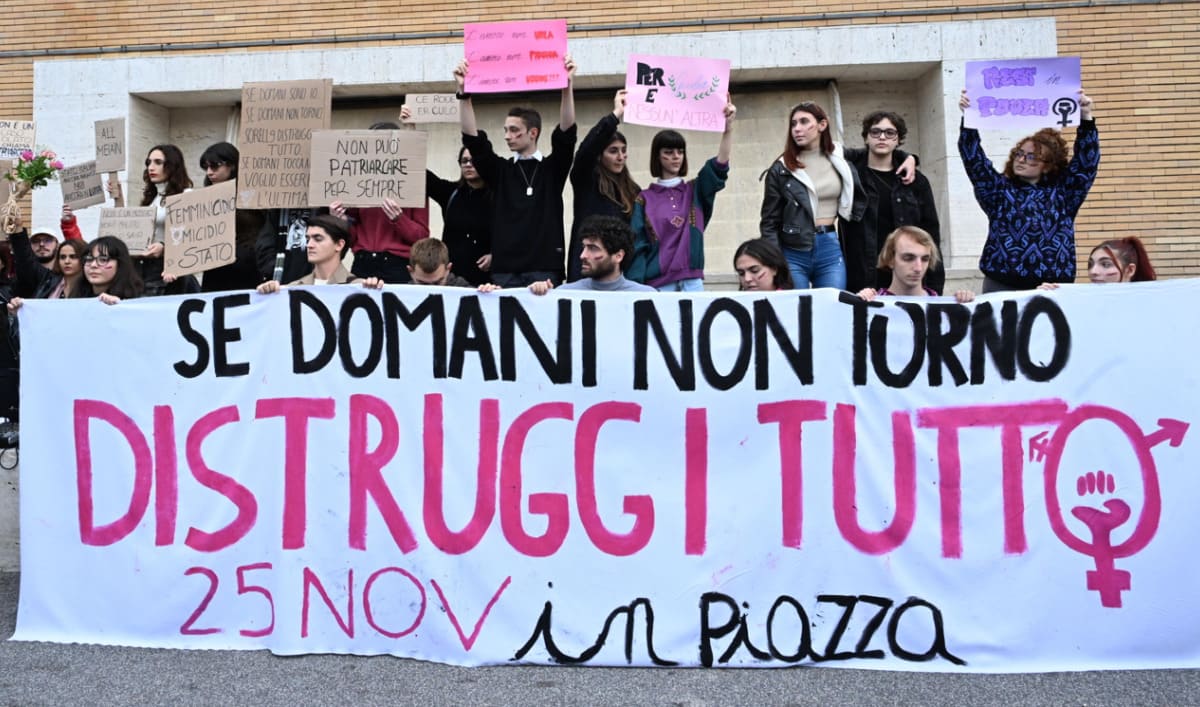
“Se domani non torno, mamma, distruggi tutto”

“If I don't come back tomorrow, mom, destroy everything”

qualche giorno fa, in Italia, è successo un bruttissimo episodio: una ragazza di 22 anni, Giulia Cecchettin, è stata uccisa dal suo ex fidanzato.

questo omicidio ha causato moltissima rabbia, soprattutto delle donne. Per questo motivo, in Questi giorni ci sono molte manifestazioni contro la violenza sulle donne.

Una frase è il simbolo di queste manifestazioni: “se domani non torno, mamma, distruggi Tutto”.

sono due frasi di una poesia di Cristina Torres-Cáceres, una donna del Perù. Cristina ha scritto questa poesia nel 2011, dopo alcuni omicidi di donne nel suo paese.

anche la sorella di Giulia, Elena, ha scritto sui social: “per Giulia non fate un minuto di silenzio, per Giulia bruciate tutto”.

Keywords

uccidere: to kill – 杀害

l’ omicidio: homicide – 谋杀

la rabbia: anger – 愤怒

la manifestazione: demonstration – 示威, 集会

la violenza: violence – 暴力

il simbolo: symbol – 符号

distruggere: to destroy – 摧毁

bruciare: to burn – 燃烧

Grammar

Imperativo
Imperative mood

“non fate un minuto di silenzio, …bruciate tutto!”
(don’t observe a minute of silence, …burn everything!)

The imperative in Italian can be used in various contexts, such as giving directions, making requests, giving orders, or suggesting actions.
The imperative is typically used in the second person singular (tu), second person plural (voi), and first person plural (noi).

– Mangia la tua cena! (Eat your dinner!)
– Venite qui! (Come here!)
– Facciamo una pausa! (Let’s have a break!)

The negative imperative is formed by placing the negation NON before the verb conjugated in the imperative:

– Non mangiare la tua cena! (Don’t eat your dinner!)
– Non venite qui! (Do not come here!)
– Non facciamo una pausa! (Let’s not take a break!)

Translation

A few days ago, in Italy, a terrible episode occurred: a 22-year-old girl named Giulia Cecchettin was killed by her ex-boyfriend.

This murder has sparked a lot of anger, especially among women. For this reason, there are many protests against violence against women these days.

A phrase has become the symbol of these protests: “se domani non torno, mamma, distruggi tutto” (if I don’t come back tomorrow, mom, destroy everything).

These two lines are from a poem by Cristina Torres-Cáceres, a woman from Peru. Cristina wrote this poem in 2011 after some murders of women in her country.

Giulia’s sister, Elena, also wrote on social media: “For Giulia, don’t observe a minute of silence, for Giulia, burn everything.”

Quiz

Pronti?