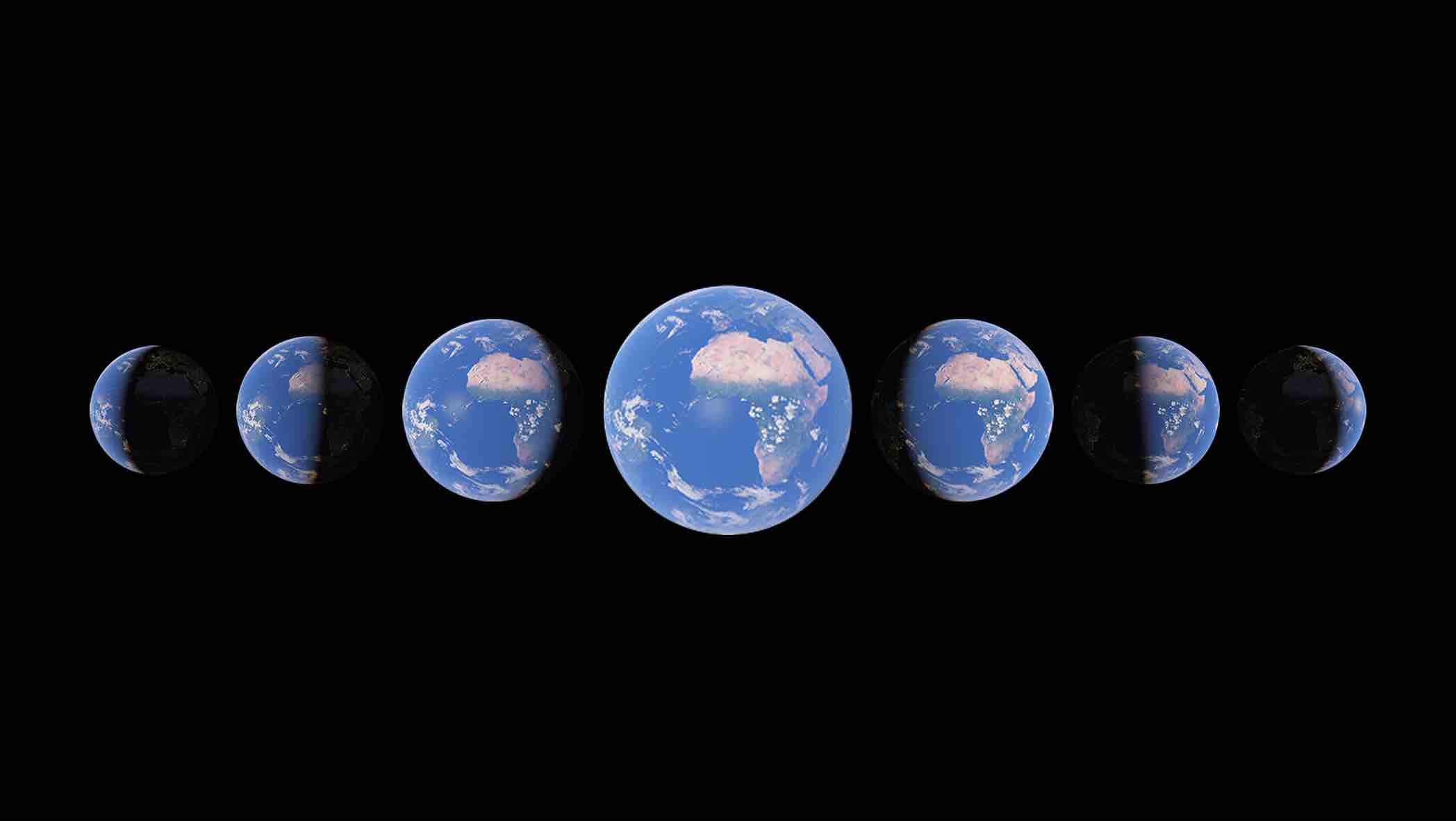
Con Google Earth si può viaggiare nel tempo

You can time travel through Google Earth

Google Earth, il servizio dell’azienda di Mountain View per consultare immagini satellitari della Terra, ha aggiunto una nuova intrigante funzione al proprio pacchetto: Si tratta di “Timelapse”, una funzione che consente di osservare i cambiamenti avvenuti in alcune zone del Pianeta negli ultimi decenni scorrendo le immagini raccolte nel corso degli anni. 

per esempio, si può osservare l’evoluzione nel tempo di alcune megalopoli come Pechino, New York e Osaka, essere testimoni dei drammatici cambiamenti di alcuni territori dovuti alla deforestazione, allo sfruttamento minerario ed edilizio, ma anche degli effetti del cambiamento climatico sui ghiacciai, la cui superficie è in drastica riduzione ormai da decenni. 

Per sviluppare Timelapse, Google ha aggiunto circa 24 milioni di immagini satellitari scattate tra il 1984 e il 2020, provenienti in larga parte dagli archivi di progetti di osservazione terrestre statunitensi ed europei. 

E a voi dove piacerebbe viaggiare indietro nel tempo?

Keywords

la funzione: function – 功能

intrigante: intriguing – 有趣的

i decenni: decades – 十年

scorrere: to scroll – 滑动

l’ evoluzione: evolution – 发展, 进化

la megalopoli: megacity – 大都市

la deforestazione: deforestation – 森林砍伐

il cambiamento climatico: climate change – 气候变化

il ghiacchiaio: glacier – 冰川

la riduzione: reduction – 减少

satellitari: satellite – 卫星的

Grammar

IL CUI = whose

“…sui ghiacciai, la cui superficie è in drastica riduzione”
(…on glaciers, whose surface area is drastically shrinking)

In this sentence, “la cui” is a relative pronoun that means “whose” in English. It is used to introduce a relative clause that describes or specifies the noun that comes before it.

In Italian, the relative pronoun “cui” can be used in combination with the definite article to form four different forms: “il cui” (masculine singular), “la cui” (feminine singular), “i cui” (masculine plural), and “le cui” (feminine plural).

The definite article agrees in gender and number with the noun it is referring to, while “cui” is invariable. These forms are used to indicate possession or relationship between two things or people.

For example:

  • Il cane, il cui padrone è mio amico, è molto affettuoso. (The dog, whose owner is my friend, is very affectionate.)
  • Ho conosciuto una persona, la cui gentilezza mi ha colpito molto. (I met a person, whose kindness struck me deeply.)
  • Le ragazze, le cui borse sono state rubate, hanno sporto denuncia. (The girls, whose bags were stolen, filed a report)

Translation

Google Earth, the service offered by the Mountain View company to view satellite images of Earth, has added a new intriguing feature to its package: it’s called “Timelapse”, a function that allows you to observe the changes that have occurred in some areas of the planet in recent decades by scrolling through the images collected over the years.

For example, you can observe the evolution over time of some megacities such as Beijing, New York, and Osaka, witness the dramatic changes in some territories due to deforestation, mining and construction exploitation, but also the effects of climate change on glaciers, whose surface has been drastically reduced for decades now.

To develop Timelapse, Google has added about 24 million satellite images taken between 1984 and 2020, largely from the archives of US and European earth observation projects.

And where would you like to travel back in time?