
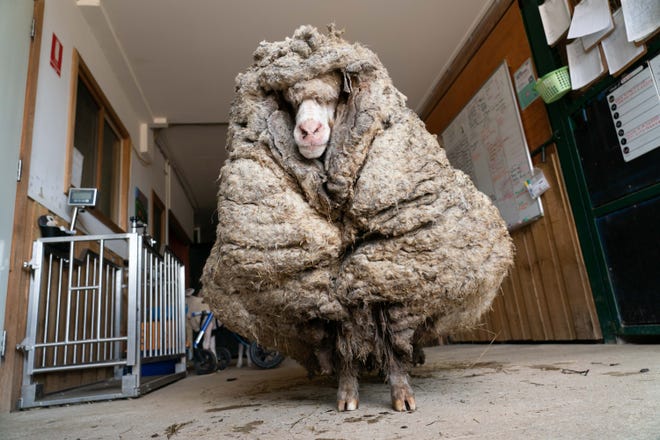
Baarack, la pecora con 35kg di lana

Baarack, the sheep with 35kg of wool

Una pecora è stata scoperta in un bosco australiano con oltre 35 kg di lana addosso. 

a causa della quantità eccessiva di lana, la pecora era in condizioni gravi e non riusciva più neanche a vedere. 

Baraack, così è stata chiamata, è stata avvistata da un cittadino, e successivamente è stata salvata da un’associazione di protezione degli animali, l’Edgar’s Mission Farm Sanctuary. 

“Probabilmente Baarack aveva un proprietario in passato“, ha spiegato un membro delľassociazione. 

tuttavia, in base alla quantità di lana, viveva in libertà da almeno 5 anni: le pecore di oggi, infatti, hanno bisogno di una tosatura all’anno, a causa della selezione della specie per migliorare la produzione di lana.

Keywords

australiano/a: Australian – 澳大利亚的

la pecora: sheep – 绵羊

la lana: wool – 羊毛

addosso: on – 在身上

il bosco: woods – 树林

l’ associazione: association – 协会

la protezione degli animali: animal protection – 动物保护

tagliare: to cut – 剪切

avere bisogno (di): to need – 需要

una… all’anno: once a year – 一年一次

a causa di: due to, because of – 由于

Grammar

Forma passiva
Passive form

“Baraack… è stata avvistata da un cittadino e successivamente è stata salvata”
(Baraack… was spotted by a citizen and was subsequently rescued)

In this sentence, the verbs “è stata chiamata”, “è stata avvistata”, and “è stata salvata” are all in the passive form because the focus is on the actions being performed on the subject (“Baraack”) rather than on who is performing the actions.
The sentence is emphasizing what happened to Baraack rather than who called, spotted, and saved her.

Sometimes, using the passive form can also make the sentence more concise by eliminating the need to specify the doer of the action.

Translation

A sheep was discovered in an Australian forest with over 35 kg of wool on its body. 

Due to the excessive amount of wool, the sheep was in critical condition and could no longer even see.

The sheep, named Baraack, was spotted by a citizen and was subsequently rescued by a local animal protection organization, Edgar’s Mission Farm Sanctuary.

“Baraack probably had an owner in the past,” explained a member of the organization. 

However, judging from the amount of wool, the sheep had been living in the wild for at least 5 years: modern sheep require annual shearing, due to the selective breeding of the species to improve wool production.
