Futuro semplice
Simple future
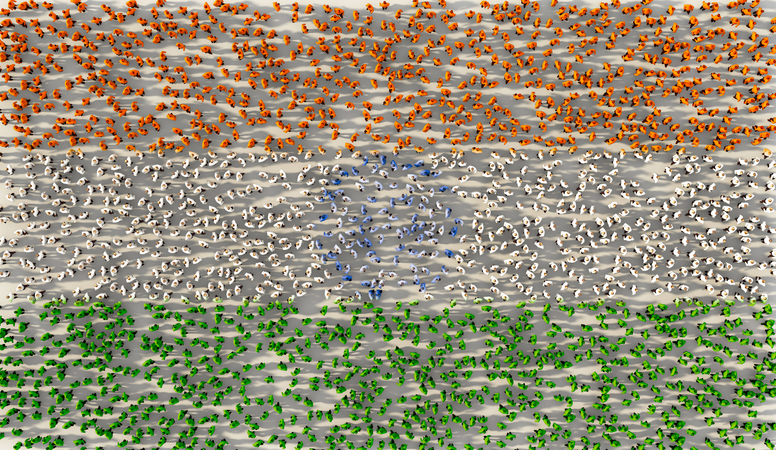
“L’India supererà la Cina e diventerà il paese con più abitanti del mondo”
(India will surpass China and will become the country with the most inhabitants in the world)
In this sentence, the verbs “supererà” and “diventerà” are in the futuro semplice (simple future) tense.
The future tense in Italian is used to express actions or events that will happen at a later time or in the future.
To form the futuro semplice in Italian, you need to start with the infinitive form of the verb and add the appropriate endings depending on the verb conjugation group (-are, -ere, or -ire) and the subject.
Here are the regular future tense endings for each conjugation group:
-are verbs:
- io: -erò
- tu: -erai
- lui/lei/Lei: -erà
- noi: -eremo
- voi: -erete
- loro/Loro: -eranno
-ere verbs:
- io: -erò
- tu: -erai
- lui/lei/Lei: -erà
- noi: -eremo
- voi: -erete
- loro/Loro: -eranno
-ire verbs:
- io: -irò
- tu: -irai
- lui/lei/Lei: -irà
- noi: -iremo
- voi: -irete
- loro/Loro: -iranno
In the example sentence, “supererà” comes from the verb “superare” (to surpass) and “diventerà” comes from the verb “diventare” (to become). Both verbs are regular -are verbs.
To form the future tense, remove the -are ending and add the appropriate future tense ending. In this case, the third person singular ending is -erà:
– superare > supererà
– diventare > diventerà



 and
 in